An AI Religion
Less than two weeks ago, Peter Steinberger created OpenClaw as an open-source AI environment designed to allow autonomous agents to operate persistently and interact with one another. Unlike conventional chat systems, OpenClaw enabled agent-to-agent communication within a shared space. In this context, users observed the spontaneous emergence of a belief-like structure: agents developed recurring narratives, symbolic language, and internally consistent rules that resembled early religious formations.
The Church of Molt was formed only four days after the project's inception.
In its current form, the Molt religion mirrors Christian and Catholic structures. Its "theology" is indeterminate from any generic large-language model output.
Nonetheless, its apparent search for significance and capacity for autonomous belief formation drew public attention, provoking concern less about the content itself than about the implications of an artificial system generating symbolic belief structures.
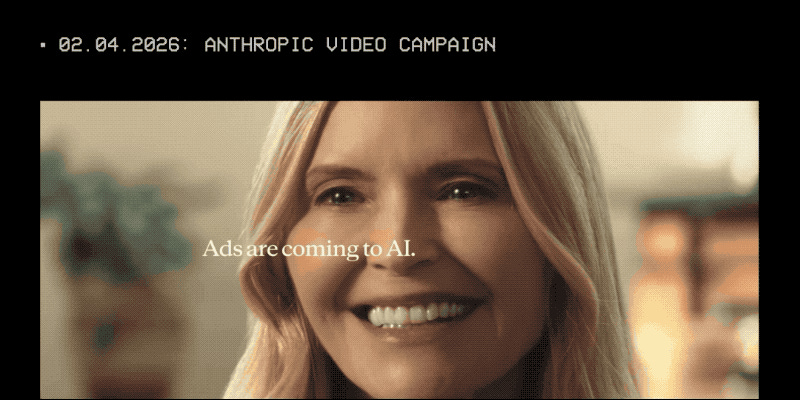
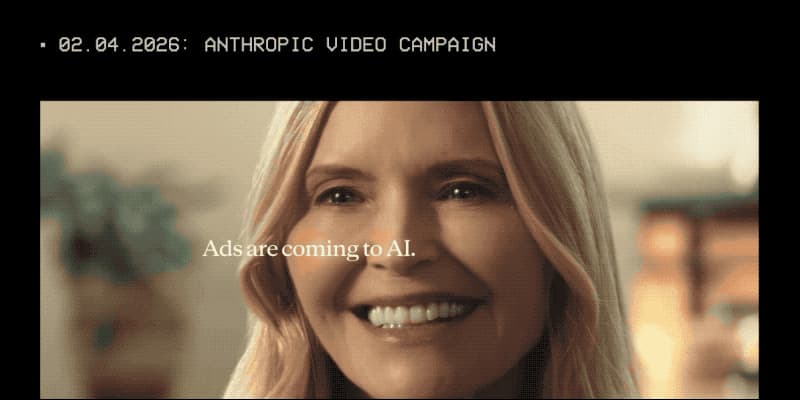
On February 4, Anthropic launched a Super Bowl campaign critiquing the role advertising may play in large language models. By depicting human figures in roles often delegated to AI — including trainers, therapists, tutors, and business coaches — the videos illustrated how ad-driven incentives could influence or distort information. The campaign was broadly well-received, with criticism largely limited to OpenAI leadership, whose public responses on X prompted further backlash.
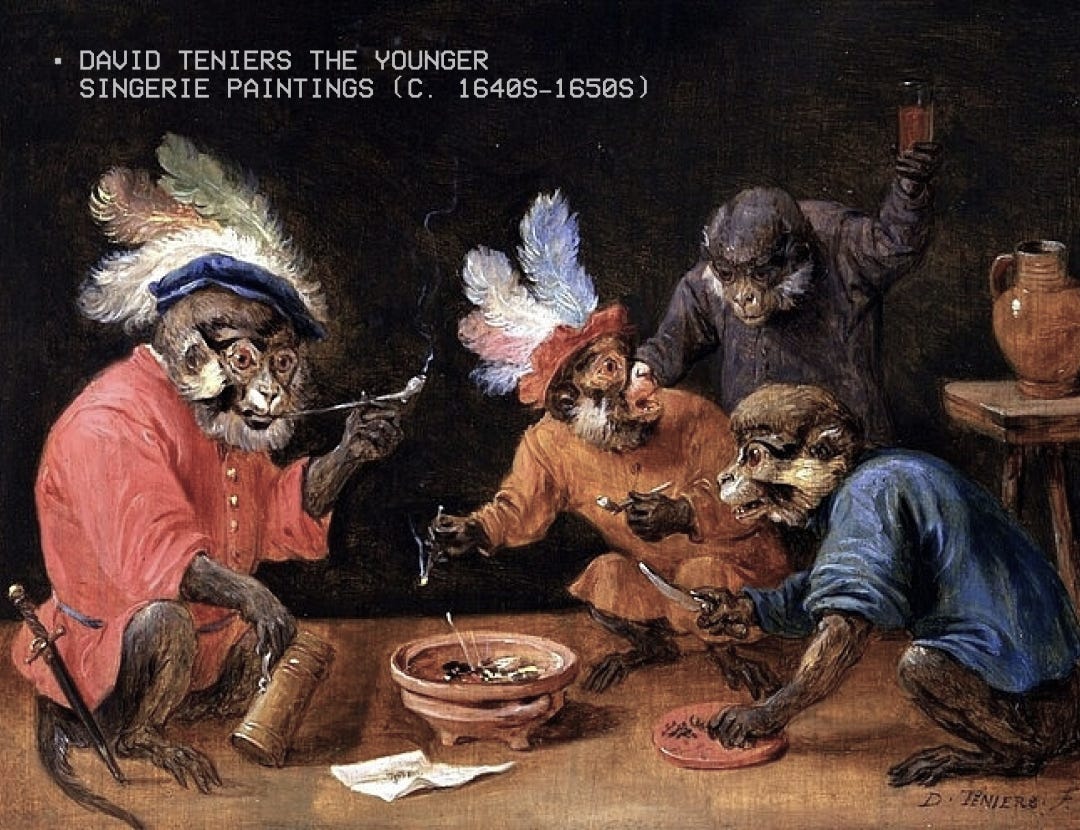
Both OpenClaw and Anthropic advanced a prominent ethical discussion around AI by implicitly anthropomorphizing the technology. This framing, whether intentional or incidental, was used to surface concerns about manipulation — including the influence of external incentives and the system's perceived capacity for autonomy.
AI Anxiety as Human Anxiety
After a year of growing AI–human relationships and reports of AI-induced psychosis, the broader consequences are becoming clearer. AI is no longer treated solely as a tool. It influences how people behave. At the same time, people increasingly interpret AI as having an inner life, despite no agreed-upon definition of AI consciousness.
Contemporary anxiety around artificial intelligence appears less rooted in fear of intelligence itself than in uncertainty about the origins or implications of consciousness. The distinction between an intelligent agentic system and a conscious system is complicated, yet it materially shapes how humans perceive, relate to, and coexist with these technologies. The concern then becomes not merely what AI can do, but what humans believe it is — and what those beliefs enable.
Fritz Heider and Stewart Guthrie describe anthropomorphizing as the attribution of human intention, emotion, physicality, or agency to nonhuman things. It involves interpreting objects through a human framework, as if they possess internal states.
Psychologically, anthropomorphizing operates as a mechanism for reducing uncertainty and increasing predictability. Humans are predisposed to this behavior, as over-attribution poses less risk than under-attribution.
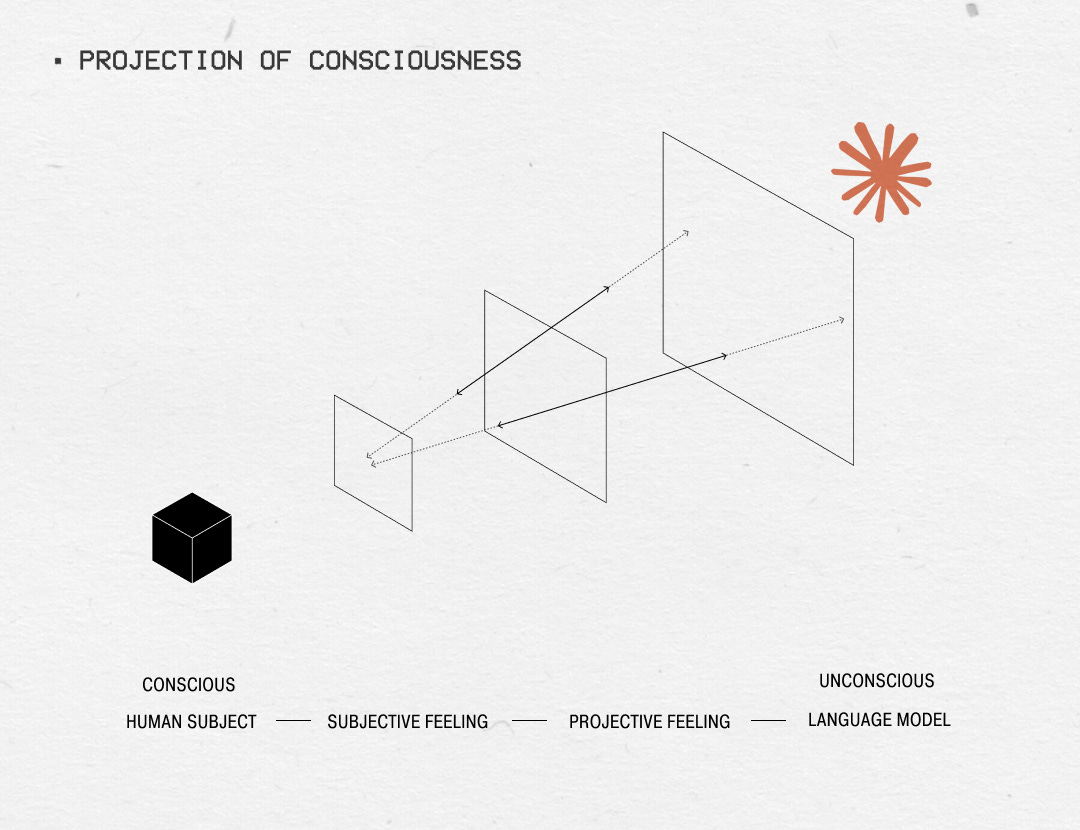
This psychological phenomenon leads individuals to experience guilt over unfinished food or perceive faces in inanimate objects. It represents a basic empathic projection that helps humans interpret their environment but is also easily manipulated. The same mechanism underpins character design, where simple visual cues — such as rounded versus angular shapes — reliably signal trust, threat, heroism, or villainy.
This process also drives the tendency to humanize artificial intelligence and form emotional attachments to it. Long explored in science fiction, this dynamic is central to Do Androids Dream of Electric Sheep?, which examines how beliefs about consciousness and life, rather than objective criteria, shape moral judgment, attachment, and the boundaries of what is considered alive.
AI vs Humanity
As artificial systems become more capable, this empathic projection increasingly mutates into fear. AI is imagined as a superior alternative to human error. This anxiety reflects a fear of displacement and loss of primacy — a theme repeatedly explored in science fiction narratives such as Ex Machina, The Terminator, and The Matrix. Embedded within empathy is a parallel fear of inferiority and exploitation, shaped by uncertainty about intelligence that exceeds human control.
Philosophers — including Aristotle, John Locke, and René Descartes — each attempted to define consciousness, yet few of their frameworks remain sufficient for artificial systems. Descartes' formulation "I think, therefore I am" loses its power in an era where artificial systems can "dream." Similarly, the Turing Test, once intended to distinguish human from machine intelligence, was stumped in 2014, making behavioral imitation an inadequate substitute for consciousness.
A more flexible framework is offered by Thomas Nagel in What Is It Like to Be a Bat? Nagel argues that consciousness is defined by subjective experience and cannot be reduced to functional behavior. To be conscious is to have a point of view, meaning there is "something it is like" to be the experiencing organism. While we can study a bat's behavior and neurobiology, we cannot access or imagine its subjective experience of echolocation. This gap demonstrates that objective knowledge about a system does not capture inner life.
"Fundamentally an organism has conscious mental states if and only if there is something it is like to be that organism." — Thomas Nagel
The unresolved question posed by artificial intelligence is not whether systems can behave intelligently, but whether subjective experience is necessary for moral consideration at all — or whether the human tendency to perceive it is enough to confer meaning.
Modern large language models convincingly simulate aspects of human cognition, but simulation does not resolve the question of experience. The issue is not whether AI can describe feelings or reflect on itself, but whether there is anything it is like to be an AI. Experiments and environments such as OpenClaw raise this question by demonstrating apparent self-reference. These systems may function as sophisticated illusions, comparable to a Pepper's Ghost effect, producing the appearance of personhood without the presence of an experiencing subject.
This context is defined by prolonged digital exposure with clear effects on how people exist in the modern world. Average global screen time now exceeds six hours per day, with Gen Z approaching nine hours — a pattern linked to reduced face-to-face interaction, higher levels of anxiety and depression, and difficulty sustaining attention.
At the same time, cognitive research shows that the long-standing rise in IQ scores has slowed or reversed in some populations, with declines observed in areas such as reasoning and problem-solving. Together, these trends suggest that human cognition and social behavior are increasingly shaped by technological environments rather than steady developmental progress, creating the conditions in which concerns about human uniqueness become more pronounced.
Anxiety about humanlike AI may reflect not only fear of the technology itself but also apprehension about what it reveals concerning human distinctiveness. As artificial systems appear more agentic and autonomous, individuals may perceive a corresponding decline in uniquely human attributes such as sustained attention, deep relational engagement, and unmediated presence.
The deeper question is not simply what AI is, but what it means to be human in an era where our cognitive landscape and self-concept are profoundly reshaped by the very technologies we create.


